

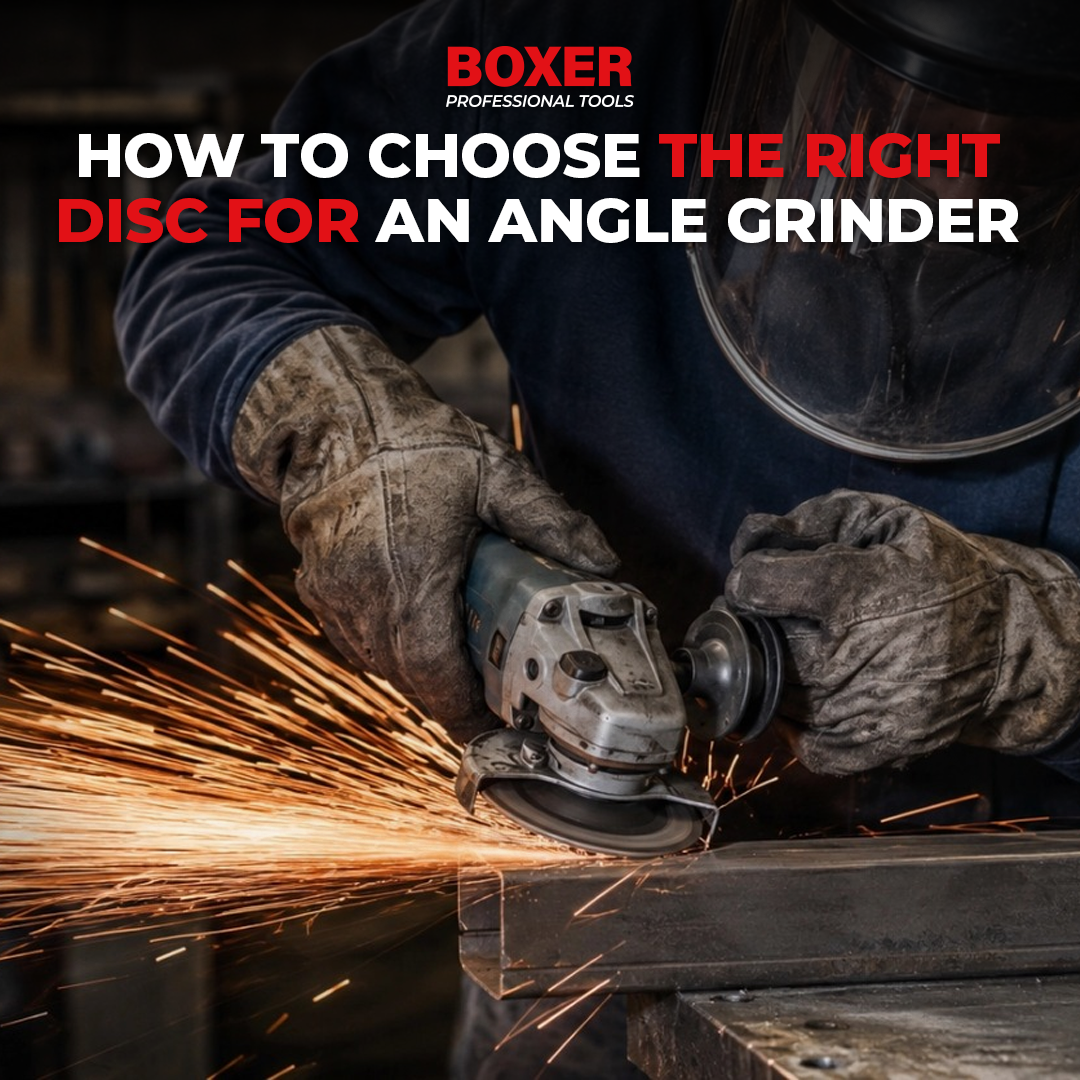
How to Choose the Right Disc for an Angle Grinder
1. Cutting Discs — For Slicing Through Metal, Steel and Masonry
Cutting discs are thin — typically 1mm to 1.6mm — and designed to slice cleanly through material in a straight line. That thinness is what makes them efficient, and also what makes them dangerous if you try to use them for anything else.
What they're good for
- Cutting steel pipe, rebar, angle iron and sheet metal
- Slicing through bolts, screws and fixings
- Cutting masonry and tile (with the right disc material — see below)
What to avoid
Never use a cutting disc for side grinding or lateral pressure. The disc is not built for it and can shatter under sideways load. Always cut in a straight line with forward motion only.
Disc thickness guide:
- 1.0mm — fast, clean cuts on thin sheet metal
- 1.6mm — general-purpose steel cutting, more durable
- 2.5mm — heavy steel, structural work
2. Grinding Discs — For Removing Material, Smoothing and Shaping
Grinding discs are thick — typically 6mm — and built to take sideways pressure. They remove material gradually rather than slicing through it, which makes them the right choice for weld cleaning, surface preparation and rust removal.
What they're good for
- Removing weld beads and slag
- Grinding down high spots on metal surfaces
- Rust and paint removal on steel
- Shaping and bevelling metal edges
What to avoid
Never use a grinding disc to cut. The thickness makes it inaccurate and the disc will overheat rapidly under the forward cutting pressure it isn't designed for.
Material codes to look for on the disc label:
A — Aluminium oxide. Best for steel and general metalwork. Most common.
C — Silicon carbide. Best for stone, concrete, and non-ferrous metals.
Z — Zirconia alumina. Best for stainless steel and hard alloys.
3. Flap Discs — The Underused All-Rounder
Flap discs are made from overlapping layers of abrasive cloth arranged in a fan pattern. They're more forgiving than grinding discs, leave a smoother finish, and last significantly longer — yet most people reach for a grinding disc out of habit.
What they're good for
- Blending and finishing welds
- Surface prep before painting or coating
- Light material removal on curved or irregular surfaces
- Cleaning and deburring aluminium
Grit guide
- 40–60 grit — aggressive removal, rough surfaces
- 80 grit — general purpose blending and finishing
- 120 grit — fine finishing, pre-paint prep
Flap discs wear gradually from the outside in, so you're always working with a fresh abrasive surface. A single flap disc typically outlasts 5–10 grinding discs on the same task.
4. Diamond Discs — For Masonry, Concrete, Tile and Stone
Diamond discs have industrial diamond particles bonded to the cutting edge. They don't wear down the way abrasive discs do — they cut by fracturing the material at a microscopic level, which is why they last far longer and cut far faster on hard materials.
What they're good for
- Cutting concrete, brick and block
- Tile and porcelain (use a continuous rim disc for clean edges)
- Natural stone, granite and marble
- Removing old mortar and grout
Two types to know
Segmented rim — fast cutting, aggressive, best for concrete and masonry. The gaps allow cooling.
Continuous rim — slower but cleaner cut, best for tile and stone where chipping is a problem.
Never use a diamond disc on metal. The diamond segments are designed for hard, brittle materials — on metal, they will wear down rapidly and produce dangerous sparks.
5. Wire Brushes and Cup Brushes — For Cleaning and Preparation
Wire brush attachments aren't discs in the traditional sense, but they fit most angle grinders and are essential for surface preparation work.
What they're good for
- Removing rust, scale and old paint from metal
- Cleaning welds before inspection
- Preparing surfaces for coating or galvanising
Always wear a full-face shield with wire brushes — individual wires break off at high speed and travel at high velocity. Safety glasses alone are not sufficient.
6. How to Read a Disc Label — The Information That Matters
Every disc has a label with critical information. Here's what to look for:
Maximum RPM
This is the most important number on any disc. Your angle grinder has a rated RPM — the disc's maximum RPM must be equal to or higher than the grinder's. Running a disc above its rated speed is the primary cause of disc failure and shattering.
- 115mm grinders typically run at 11,000–12,000 RPM
- 125mm grinders typically run at 10,000–11,000 RPM
- 230mm grinders typically run at 6,500–7,000 RPM
Disc size
Always match the disc diameter exactly to your grinder's guard size. Never remove the guard to fit a larger disc — this is one of the most dangerous things you can do with a power tool.
Material symbol
The disc label will show the recommended material with a symbol or letter code. If the material you're working on isn't listed, use a different disc.
The One Rule That Covers Everything
Match the disc to the material and the task — not to what's already on the grinder.
It takes ten seconds to swap a disc. It takes considerably longer to recover from a shattered one.
Recommended: Boxer Angle Grinders
Boxer Professional Tools offers a range of angle grinders in 115mm, 125mm and 230mm sizes, suited for both professional site use and workshop applications.
Browse Boxer Angle Grinders
For bulk orders or wholesale pricing, contact the Boxer team directly:
Quick Reference — Which Disc for Which Job?
| Disc Type | Best For | Avoid |
|---|---|---|
| Cutting disc (1–1.6mm) | Steel, pipe, rebar, masonry | Side grinding, lateral pressure |
| Grinding disc (6mm) | Weld removal, rust, shaping | Cutting in straight lines |
| Flap disc (40–120 grit) | Blending, finishing, aluminium | Heavy material removal |
| Diamond segmented | Concrete, brick, block | Metal of any kind |
| Diamond continuous rim | Tile, stone, porcelain | Aggressive concrete cutting |
| Wire brush | Rust removal, surface prep | Use without full face shield |
Related Blogs
How to Choose a Heavy-Duty Concrete Drill Machine: A Buyer's Guide by Boxer Tools
How Does an Air Blower Work? A Practical Guide to the Mechanics and Uses

Power Tool Trends for 2026: A Guide for Wholesale Buyers and Distributors
Top 10 Wholesale Angle Grinder Manufacturers Worldwide

How to Choose the Right Cordless Garden Tools in 2026

How to Start a Power Tool Distribution Business in Europe: The Complete 2026 Guide

European Power Tools Suppliers: How to Find the Best Wholesale Partners in 2026

SIGN UP FOR NEWSLETTER
Copyright © 2026 Boxertools | Developed By Mammar Tech