
Successfully subscribed!
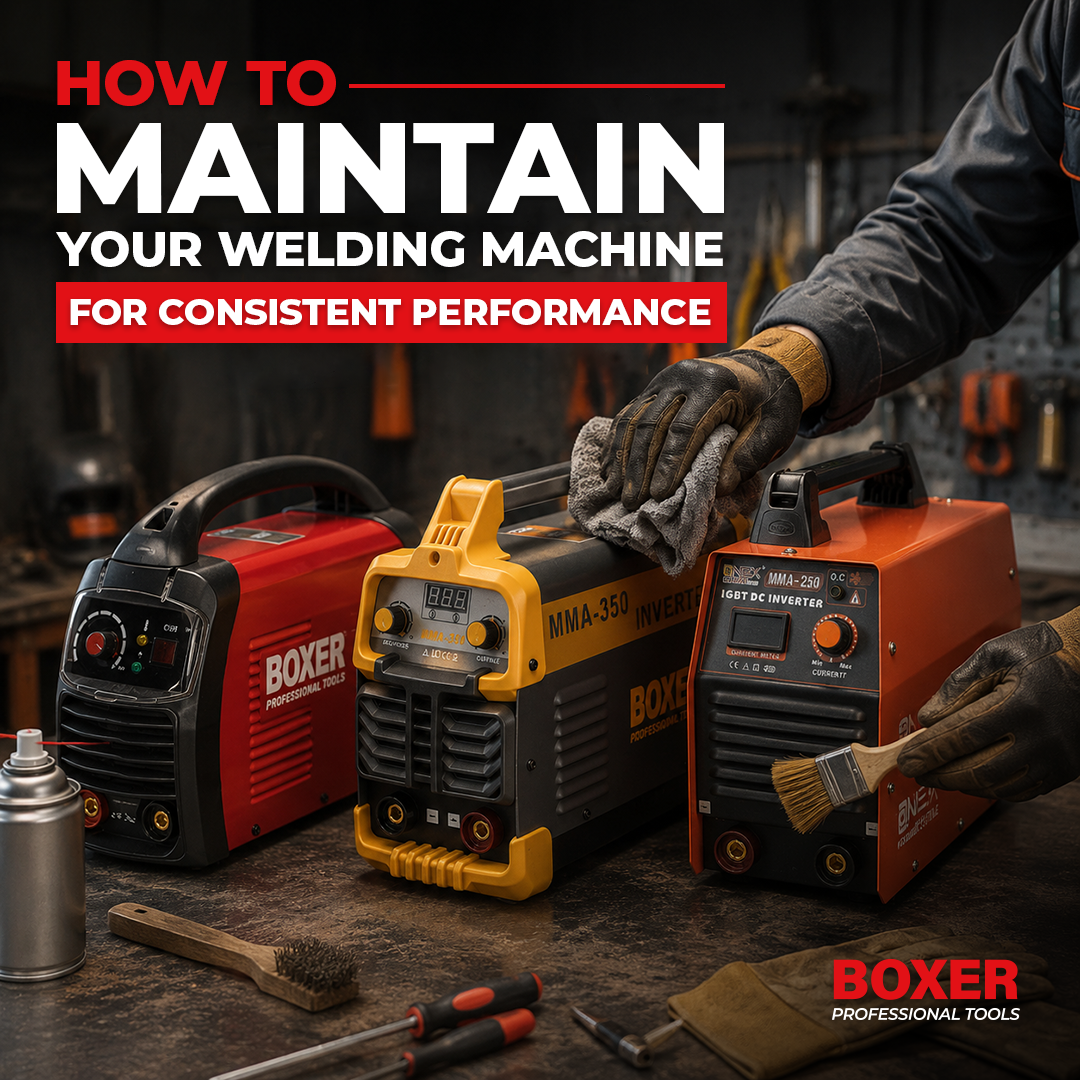
How to Maintain Your Welding Machine for Consistent Performance

How to Maintain Your Welding Machine for Consistent Performance

05 Jun 2026

A welding machine is an essential tool for welders, fabricators, contractors, workshop owners, and DIY users. Regular welding machine maintenance is crucial for maintaining consistent weld quality, reducing downtime, lowering repair costs, and extending equipment life. Simple practices like cleaning, cable inspection, and cooling system checks can greatly improve welding machine performance and reliability. Professionals worldwide trust Boxer Professional Tools, a brand offering 300+ durable, high-quality tools for workshops and homeowners. In this guide, you’ll learn practical welding machine care tips to improve efficiency, safety, and welding machine lifespan.


Why Welding Machine Maintenance Matters

Routine welding equipment maintenance is about more than keeping a machine clean. It directly affects performance, safety, and operating costs.

Consistent Arc Performance

A stable welding arc is essential for producing high-quality welds. Dust accumulation, worn cables, or loose electrical connections can disrupt current flow and create inconsistent arc behavior. Regular maintenance helps ensure smooth and stable operation.

Better Weld Quality

Poorly maintained machines often produce uneven welds, excessive spatter, and inconsistent penetration. Keeping your equipment in good condition helps achieve cleaner, stronger, and more professional welds.

Reduced Repair Costs

Minor maintenance tasks can identify small problems before they become major repairs. Replacing a worn connector is far less expensive than repairing damaged internal components.

Improved Safety

Damaged cables, overheating systems, and faulty electrical connections can create serious safety risks. Routine inspections help protect both operators and equipment.

Longer Machine Lifespan

Consistent maintenance reduces wear on internal components and helps maximize the overall welding machine lifespan, ensuring years of reliable service.


Keep Your Welding Machine Clean

Dust, metal particles, and workshop debris can reduce welding machine performance by blocking airflow and affecting internal components. Regular cleaning helps prevent overheating, improves efficiency, and extends equipment life.

Remove Dust and Debris

Clean the machine regularly to remove dust, dirt, and metal particles.

Use compressed air or a soft brush to clean accessible areas.

Avoid excessive air pressure that may damage internal components.

Clean Vents and Cooling Fans

Keep ventilation openings and cooling fans free from dust buildup.

Clean vents regularly to maintain proper cooling efficiency.

Check fans for smooth operation and remove any debris.

Ensure Proper Airflow

Place the welding machine in a well-ventilated area.

Keep objects away from vents and airflow openings.

Allow sufficient space around the machine for proper heat dissipation.

Recommended Cleaning Schedule

Perform a quick visual cleaning after each use.

Inspect vents and cooling fans weekly.

Conduct a thorough cleaning monthly.

Clean more frequently in dusty workshop environments.

Regular cleaning is one of the most effective welding machine care tips for maintaining reliable performance and extending the welding machine lifespan.

Inspect Cables and Connections Regularly

Cables and connections play a crucial role in welding machine performance, efficiency, and safety. Regular inspections help prevent power loss, unstable arcs, and unexpected equipment failures.

Check Power Cables

Inspect cables for cuts, cracks, burns, or exposed wires.

Replace damaged cables immediately to avoid safety risks and power interruptions.

Examine Ground Clamps

Ensure ground clamps are clean, secure, and corrosion-free.

Poor grounding can cause unstable arc performance and poor weld quality.

Inspect Electrode Holders

Check for loose parts, damaged insulation, or overheating signs.

Replace worn holders to maintain safe and efficient operation.

Tighten Loose Connections

Inspect and tighten electrical connections regularly.

Loose connections can generate heat, reduce efficiency, and affect welding quality.

Maintaining cables and connectors is essential for reliable welding performance and workplace safety.


Monitor Cooling Systems

Proper cooling is vital for preventing overheating and extending the welding machine lifespan. A well-maintained cooling system ensures consistent performance and protects internal components.

Prevent Excessive Heat Build-Up

Follow the machine's recommended duty cycle.
Allow cooling periods during extended operation.

Inspect Cooling Fans

Ensure cooling fans operate smoothly and quietly.
Replace faulty fans immediately to prevent overheating.

Ensure Proper Ventilation

Operate the machine in a well-ventilated area.
Keep airflow paths clear and unobstructed.

Watch for Warning Signs

Frequent thermal shutdowns
Excessive machine temperature

Reduced welding output

Unusual fan noise or malfunction
Cooling system maintenance is particularly important for inverter welding machine maintenance, as inverter components are highly sensitive to heat.

Protect Against Moisture and Harsh Environments

Moisture, dust, and harsh workshop conditions can damage internal components and reduce welding machine performance. Proper protection helps extend the welding machine lifespan and maintain reliable operation.

Store Equipment Properly

Store your welding machine in a clean, dry location away from rain, humidity, and direct moisture exposure. Using a protective cover when the machine is not in use can help prevent dust buildup and environmental damage.

Prevent Corrosion

Keep connectors, terminals, and metal components dry to prevent rust and corrosion. Regular inspections can help identify moisture-related damage before it affects performance.

Consider Workshop Conditions

Avoid operating the machine in environments with excessive dust, moisture, or chemical fumes whenever possible. Maintaining proper ventilation and increasing maintenance frequency in harsh conditions can help protect the equipment.
Protecting your welding machine from environmental damage is essential for long-term reliability and efficient performance.

Check Consumables and Accessories

Regularly inspect consumables and accessories to maintain weld quality and reliable welding machine performance.

Inspect Electrodes

Replace damaged or contaminated electrodes and store them properly to prevent moisture damage.

Check Connectors

Ensure connectors are clean, secure, and free from corrosion.

Examine Welding Leads

Inspect welding leads for cracks, cuts, or exposed wires and replace damaged leads promptly.

Replace Worn Components

Replace worn accessories before they affect performance or cause downtime.

Use Proper Operating Settings

Correct settings help improve efficiency and protect the machine from unnecessary wear.

Select the Correct Amperage

Use the recommended amperage for the material and electrode being used.

Follow Manufacturer Guidelines

Operate within the manufacturer's recommended settings and duty cycle limits.

Avoid Overloading the Machine

Avoid exceeding the machine's capacity to prevent overheating and component damage.

Schedule Preventive Maintenance

Routine maintenance keeps the machine efficient, reliable, and reduces unexpected breakdowns.
Daily Checks
Inspect cables, connections, and overall machine condition before operation.
Weekly Inspections
Clean vents, check cooling fans, and ensure accessories are in good condition.
Monthly Maintenance Checklist
Perform a detailed cleaning and inspect key internal and external components.
Benefits of Preventive Maintenance
Regular maintenance improves reliability, extends equipment life, reduces repair costs, and ensures consistent welding performance.

Common Maintenance Mistakes to Avoid

Even experienced welders often overlook basic welding machine maintenance practices.

  • Blocking Air Vents: Restricted airflow can cause overheating and reduce performance.
  • Ignoring Warning SignsNoise, overheating, or unstable arc issues should be checked immediately.
  • Using Damaged CablesDamaged cables reduce efficiency and create safety risks.
  • Poor Storage PracticesMoisture, dust, and heat exposure can shorten equipment life.
  • Skipping Routine InspectionsSmall issues can turn into costly repairs if ignored.
Avoiding these mistakes helps ensure long-term reliability and stable performance.

Boxer Professional Tools Welding Solutions

Boxer Professional Tools provides reliable welding machines designed for professional and workshop use.

OX3010 250A inverter welding machine with PWM technology, Hot Start, Anti-Stick, and Arc Force. Supports 1.6mm–4.0mm electrodes.
SR2000 400A inverter welding machine with 230V operation, PWM technology, LCD display, and lightweight design.
SR2004230V inverter welding machine with 20–350A output range, PWM technology, and LCD display.

Proper welding machine maintenance improves performance, reduces downtime, and extends equipment life. Regular cleaning and inspections ensure reliable results.
Boxer Professional Tools supports professionals with 300+ durable tools. Invest in proper maintenance for consistent, long-term productivity.
https://boxertools.eu/frontend/images/icon-newsletterl.svg

SIGN UP FOR NEWSLETTER