

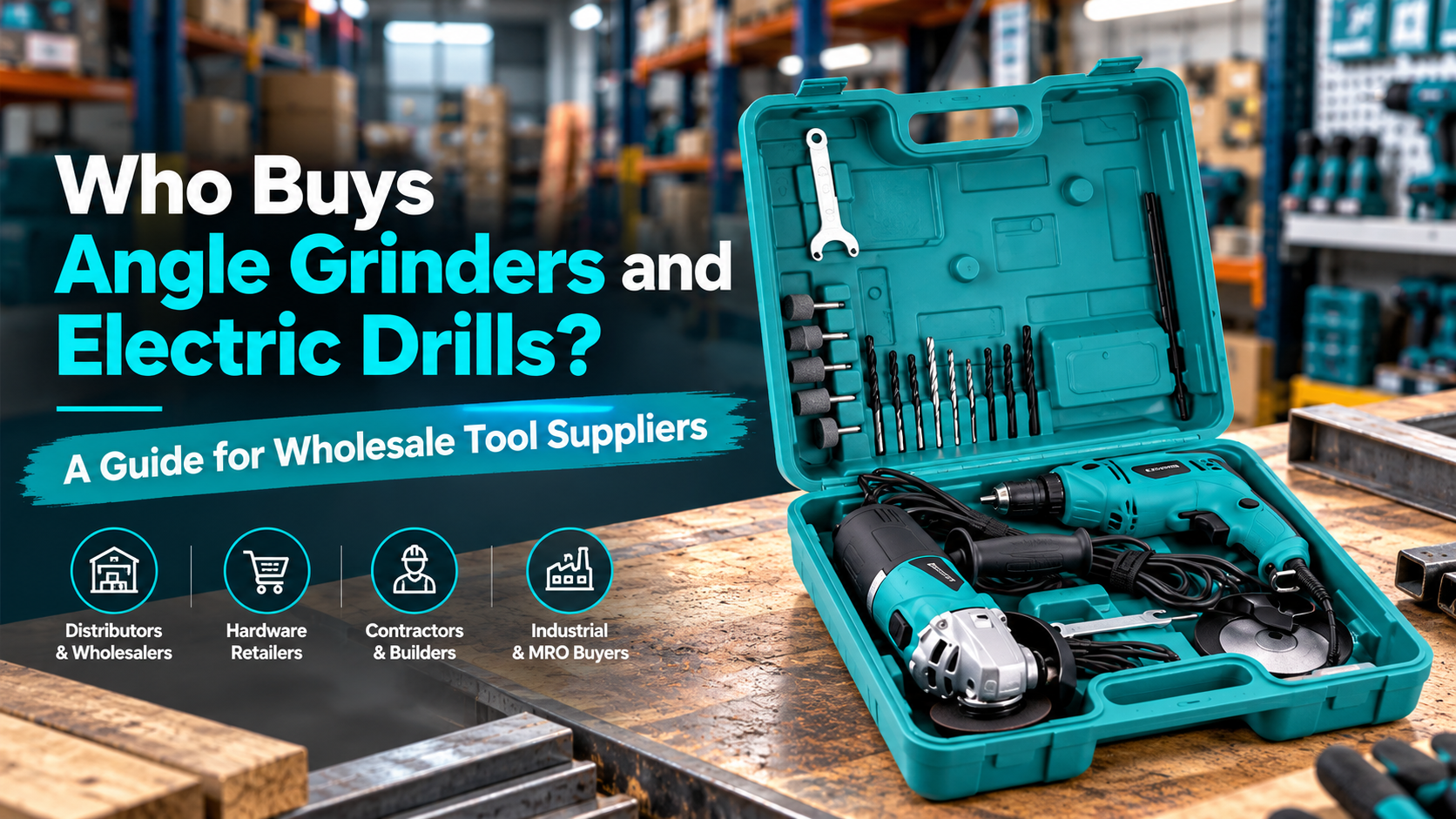
Who Buys Angle Grinders and Electric Drills? A Guide for Wholesale Tool Suppliers
Angle grinders and electric drills are two of the most widely used power tools in the world. They appear on construction sites, in metal workshops, in maintenance cupboards, and in home garages. For wholesalers and distributors, that breadth is both an opportunity and a challenge: almost everyone could buy these tools, but not everyone needs the same tool.
This guide walks through the main customer groups for angle grinders and electric drills, what each group typically looks for, and how to decide which products belong in your range. It also looks at one product worth evaluating: the BOXER CP-117 Angle Grinder and Electric Drill Set.
Why Customer Segmentation Matters in Power Tool Wholesale
Power tools are not a one-size-fits-all category. Two buyers can both ask for "a grinder" and mean completely different things: one needs a machine that can run through a full shift, the other needs something for a few garden-gate repairs a year.
When wholesalers skip segmentation, a few problems tend to follow:
Stock that doesn't move. A range built around one customer type leaves other segments underserved, while the products you did buy gather dust.
Price-led decisions. Choosing products on cost alone often results in a catalogue with no clear purpose.
Weak customer relationships. Buyers return to suppliers who understand their work. Generic offerings rarely earn repeat orders.
Thinking in segments helps you ask better questions before you buy: Who will use this? How often? For which materials? What accessories will they need next?
1. Contractors and Construction Companies
Contractors and construction companies use power tools across a wide range of site tasks. Electric drills help with drilling holes and, when fitted with suitable bits, with fastening applications. Angle grinders are used for cutting and grinding compatible materials with the appropriate discs.
Because site work is demanding, these buyers tend to be practical and experienced. They know what a tool should feel like in the hand, and they remember which brands let them down.
What these buyers look for:
Reliable performance for regular use
Suitable motor power and operating speed
Durable construction and practical handling
Safety features and compatible accessories
Consistent availability from suppliers
The wholesale opportunity: Contractors and construction businesses can be valuable long-term customers. As projects grow and crews expand, they may need replacement tools, extra equipment, and a steady supply of accessories. A supplier who can deliver reliably, and who stocks the discs and bits that go with the tools, becomes a convenient single point of purchase.
A note on fit: Not every tool suits every level of site work. Some products are positioned for light and moderate use rather than all-day professional duty. Matching the tool's stated purpose to the customer's workload protects both your reputation and theirs.
2. Metalworking Workshops and Fabrication Businesses
Metalworking and fabrication workshops rely on angle grinders for cutting, grinding, and surface preparation. Electric drills are used to create holes in metal and other materials when fitted with the correct drill bits.
These businesses often choose tools according to their workload, the materials they handle, and their operating conditions. A small repair workshop may value flexibility and low cost, while a larger fabrication shop may prioritise consistency across many identical units.
What these buyers look for:
Suitable cutting and grinding capabilities
Compatibility with commonly used accessories
Consistent product quality
Replacement tool availability
Competitive purchasing terms
The wholesale opportunity: Workshops consume accessories continuously. Cutting discs, grinding discs, and drill bits wear out and need replacing, which makes this segment a natural fit for suppliers who offer a practical selection of grinders, drills, and consumables together. Standard disc sizes, such as the common 125mm format, make it easier for these customers to source compatible accessories from you repeatedly.
3. Hardware Stores and Tool Retailers
Hardware stores and specialist tool retailers buy from wholesalers to resell to local customers. Their shoppers may include tradespeople, maintenance workers, small businesses, and individual DIY users, so retailers need a range that covers several needs without tying up too much capital.
For retailers, choosing the right products means balancing customer demand, purchase costs, available shelf space, and stock turnover.
What retailers look for from wholesalers:
Competitive wholesale pricing
Products suited to their local customer base
Reliable stock availability
Clear product specifications and documentation
Dependable delivery and after-sales support
Why combination sets work for retailers: A two-tool set can simplify shelf space and give shoppers a clear, easy-to-understand offer. Instead of comparing several separate tools, the customer sees one box that covers cutting, grinding, and drilling. A combination set such as the BOXER CP-117 can be considered as part of a broader power tool assortment, subject to its specifications, price, and the needs of the retailer's customers.
Documentation matters: Retailers often pass product information on to shoppers. Wholesalers who provide clear specifications, product images, and catalogue sheets make it easier for retailers to sell with confidence.
4. DIY Stores and Home Improvement Suppliers
DIY stores serve customers who carry out home repairs, furniture projects, and other improvement work. Some of these customers need a drill for routine projects such as hanging shelves or assembling furniture. Others may need an angle grinder for suitable cutting or surface-preparation tasks around the home.
These buyers are often less experienced than professionals, which changes what they value.
What this segment generally benefits from:
Clear instructions
Straightforward specifications
Appropriate safety information
Good value for occasional use
The convenience of buying related tools together
The wholesale opportunity: Stocking products for this segment can expand your range beyond professional construction and industrial customers. DIY and home improvement demand also tends to follow seasonal patterns, with spring and early summer often bringing renovation and repair activity, so planning inventory around those periods can help you avoid shortages when demand rises.
5. Maintenance Teams and Repair Businesses
Property maintenance companies, repair workshops, installation businesses, and facility management teams may use drills and angle grinders for equipment maintenance and repair work.
Their purchasing requirements depend on the type of work they perform. Some prioritise general-purpose drilling for installations and fixings. Others need tools for metalwork or specific maintenance applications. Because their work is varied, versatile tools and sets often appeal to them.
What these buyers look for:
Tools that handle a mix of small and medium jobs
Easy availability of replacement accessories
Simple, dependable operation
Reasonable pricing for equipment that may be shared across a team
The wholesale opportunity: Maintenance customers tend to buy steadily rather than in large one-off orders. Offering suitable tools alongside compatible accessories and replacement products makes you a convenient repeat supplier.
6. How Wholesale Suppliers Can Choose the Right Customers
Not every customer group has the same purchasing requirements, and not every group is equally profitable or equally suited to your business. Before deciding which tools to stock, consider the following factors:
Customer type: Consider whether your buyers are contractors, workshops, retailers, or maintenance businesses.
Product requirements: Check motor power, speed, tool capacity, and intended applications.
Price range: Match products to the purchasing budget of your target customer.
Stock availability: Look at supplier lead times and your ability to replenish inventory.
Accessories: Confirm that compatible discs, bits, and other consumables are available.
Support: Review warranty terms, documentation, and after-sales service.
Understanding these factors helps wholesalers avoid building a catalogue based only on price or specifications.
A simple process for building your range
Identify your strongest customer segments. Look at who already buys from you and who you would like to reach.
Define the typical job. Is it daily professional use, occasional repairs, or light home projects?
Match tool specifications to that job. Check motor power, speed, and disc or drill capacity against real requirements.
Check the supply chain. Confirm lead times, replenishment options, and accessory availability before committing to volume.
Review support terms. Warranty and documentation affect your costs after the sale.
Start small and track results. Test a product with a limited order, then scale based on how quickly it sells.
Which customers is it best suited to?
Based on how the manufacturer positions the set, it is oriented towards home maintenance, DIY, and light workshop use rather than heavy industrial duty. That makes it a natural candidate for:
Hardware stores and tool retailers looking for a value-oriented combination set for everyday customers
DIY stores and home improvement suppliers serving homeowners with repair and renovation projects
Small maintenance and repair businesses that need general-purpose tools for lighter jobs
Smaller workshops that want a simple, economical pair of tools for occasional tasks
Wholesalers who supply heavy-duty professional customers will likely want to pair a set like this with more specialised equipment, so that each segment is served by tools designed for its workload.
What to check before adding it to your catalogue
Before adding the set to a wholesale range, buyers should review the following:
Confirmed specifications: Verify the technical details directly with the manufacturer, including any specifications not published online, such as chuck capacity or included accessories.
Intended applications: Make sure the set matches the needs of the customers you plan to sell to.
Included accessories: Confirm exactly what is in the box, such as discs, drill bits, and handles.
Warranty conditions: Understand coverage and how claims are handled.
Wholesale purchasing terms: Ask about pricing tiers, minimum order quantities, and lead times.
Current availability: Confirm stock status and replenishment timelines before promising supply to your own customers.
These details help determine whether the set is suitable for the retailers, workshops, and other business customers you serve.
Honest product positioning protects your customers and builds the kind of trust that keeps retail partners ordering.
Contractors, metalworking workshops, hardware retailers, DIY stores, and maintenance businesses all represent potential customer groups for angle grinders and electric drills. However, each segment has different requirements when it comes to performance, pricing, accessories, and product availability.
For wholesale suppliers, understanding these differences is an important step towards building a relevant power tool catalogue. By matching products such as the BOXER CP-117 to the needs of their target customers, wholesalers can make more informed stocking decisions and develop stronger business relationships.
If you are expanding your power tool range, start with your customers, define the work they do, and choose products that fit. The right match between tool and buyer is what turns a catalogue into a business.
Related Blogs
Why the 185mm Circular Saw Is the Best Seller Every Tool Shop Should Stock
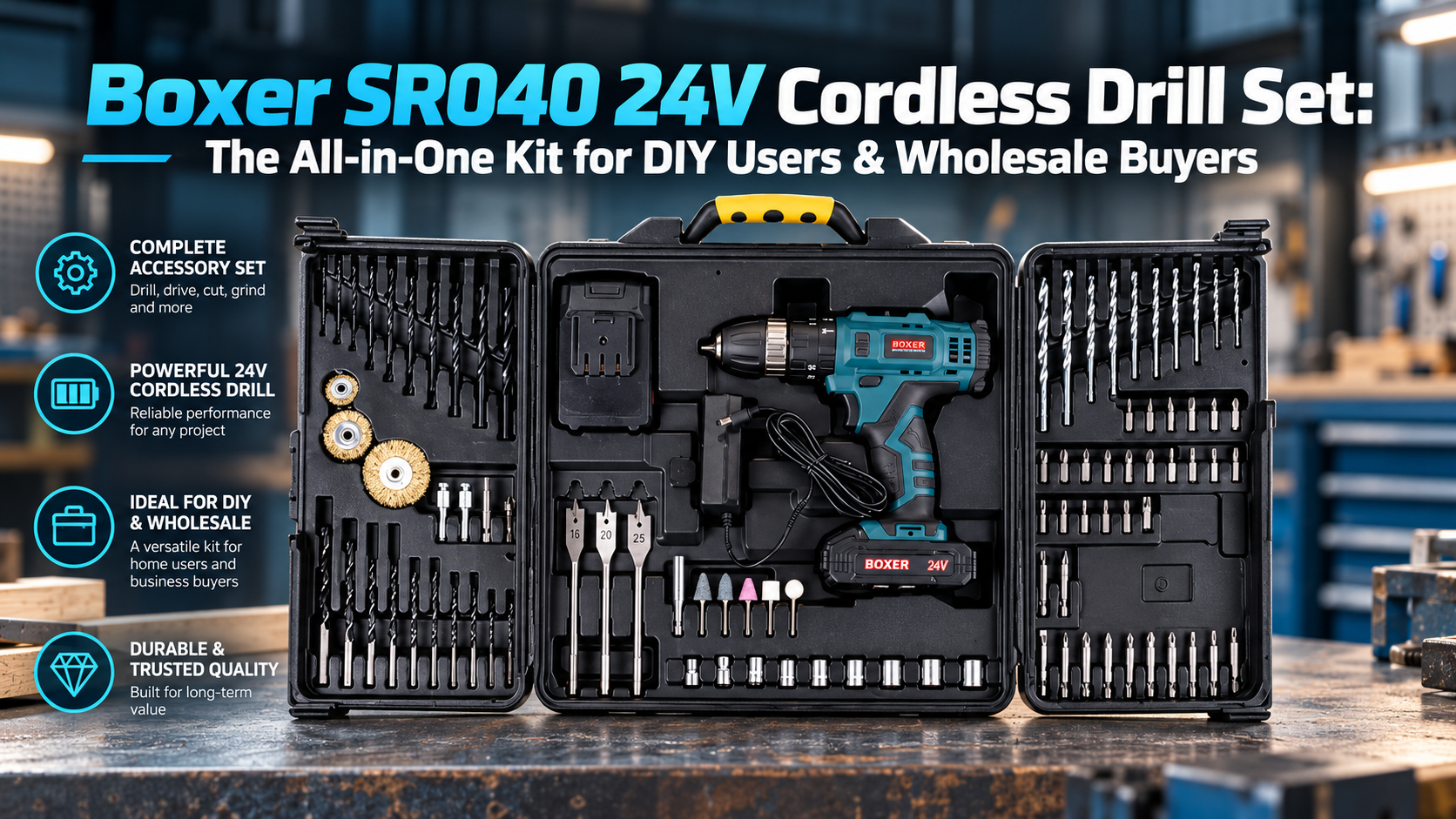
Boxer SR040 24V Cordless Drill Set: The All-in-One Kit for DIY Users & Wholesale Buyers
Cordless Drills Wholesale Europe 2026: Best Picks for Projects and Professional Use
Hand Tools Wholesale for Europe: Your Autumn and Winter Stocking Guide
Cordless Power Tools Wholesale 2027: Why Cordless Drills Will Be the Top-Selling Tool This Season
How to Choose a Heavy-Duty Concrete Drill Machine: A Buyer's Guide by Boxer Tools
How Does an Air Blower Work? A Practical Guide to the Mechanics and Uses

SIGN UP FOR NEWSLETTER
Copyright © 2026 Boxertools | Developed By Mammar Tech