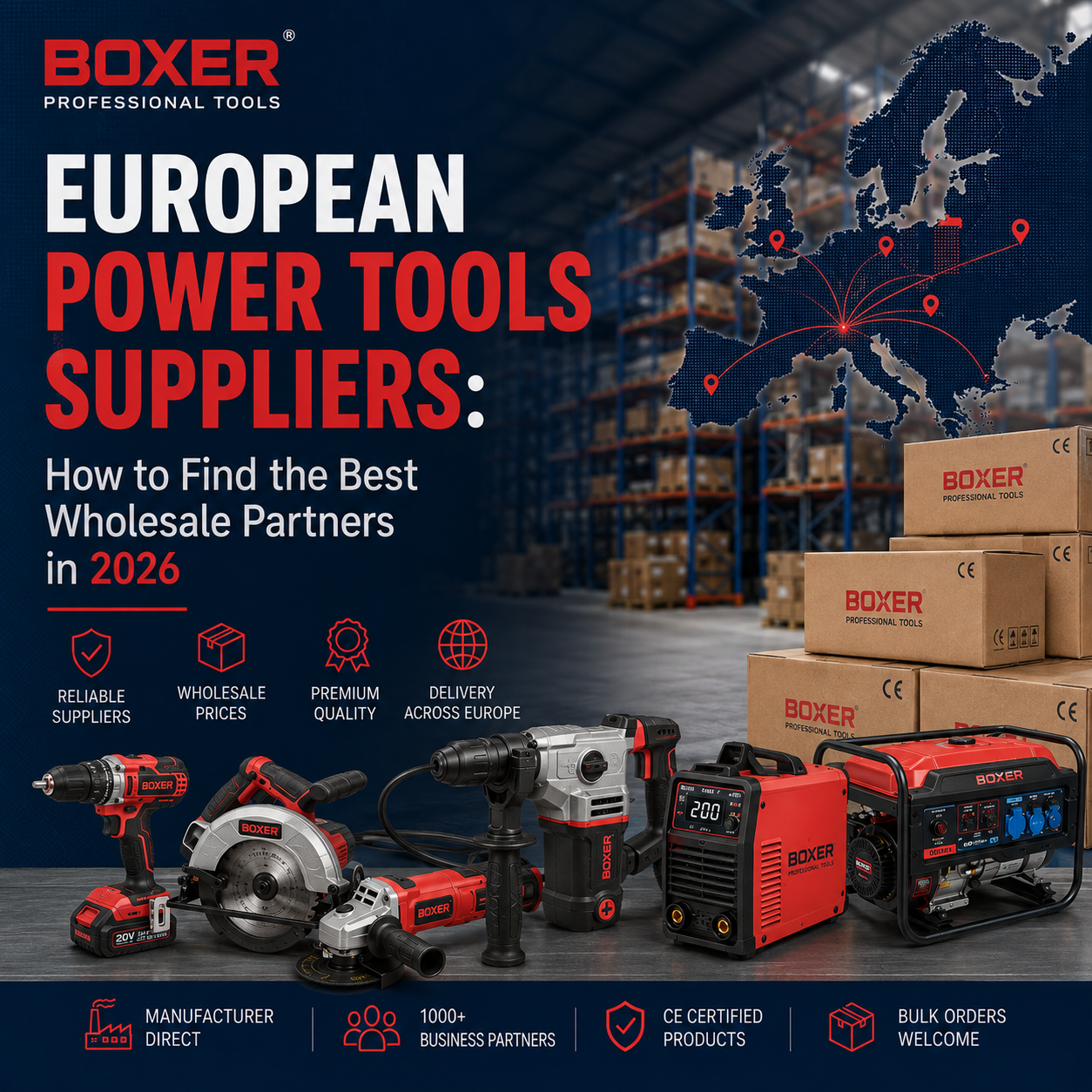
European Power Tools Suppliers: How to Find the Best Wholesale Partners in 2026
- "European power tools supplier" is an umbrella term covering four different business models: retailers/dropshippers, wholesalers & distributors, private label manufacturers, and OEM/contract manufacturers.
- Your choice depends on one question first: do you want to resell established brands, or build your own tool line?
- Distribution and wholesale offer the fastest time-to-market with the lowest risk. Private label and OEM offer higher margins but require larger minimum order quantities (MOQs) and longer lead times.
- Vetting matters more than price — certifications, MOQ fit, lead times, and CE/EU compliance should all be checked before you shortlist a supplier.
- Europe is not one market — Germany, Italy, and Poland each have different manufacturing strengths, lead times, and price points for power tools.
What Counts as a Power Tools Supplier?
A power tools supplier is any business that provides you with finished tools or the capability to produce them. In Europe, this ranges from a distributor holding stock of recognized brands, to a factory manufacturing cordless drills to your own specification. The label "supplier" alone tells you very little — what matters is the business model behind it, because that decides your margins, MOQs, branding options, and lead times.
There are four models worth understanding before you start sourcing.
The Four Types of European Power Tools Suppliers, Compared
1. European retailers & dropship suppliers
These suppliers ship tools order by order, so you never hold inventory yourself. It's the lowest-risk way to test demand for a new tool category, but margins are thin, you're competing with every other reseller of the same catalogue, and you have little control over packaging or delivery experience.
2. European wholesalers & distributors
Wholesalers and distributors sell established power tool brands in bulk, at a discount, for you to resell — typically under the manufacturer's own brand. This model suits hardware stores, e-commerce sellers, and trade suppliers who want recognized, trusted brands on their shelves without any production commitment. Availability is fast, but you don't own the product or the brand.
3. European private label power tools manufacturers
A private label manufacturer produces standard, proven tool designs (drills, grinders, saws, sanders) that you sell under your own brand and packaging. This is the fastest route to building a real product line with healthy margins, which is why it's a common path for hardware and DIY brands scaling in Europe. Expect an MOQ and a lead time measured in weeks.
4. European OEM/contract manufacturers
A contract manufacturer builds a tool to your exact specification — motor power, battery platform, ergonomics, housing design. This gives you the most differentiated product and the highest margins, at the cost of higher MOQs, longer development cycles, and more technical coordination (especially for battery-powered tools, which require additional safety testing). It's the right model once your positioning depends on a tool that doesn't already exist off-the-shelf.
How to Choose the Right Type for Your Business
Start with one question: are you reselling an existing brand, or building your own? If you want a brand, you need private label or OEM manufacturing. If you want to resell trusted names quickly, you need wholesale or distribution — which is where a partner like Boxertool.eu fits, offering bulk access to recognized power tool brands without production lead times.
Three constraints usually decide the rest:
- Budget and volume — Wholesale and distribution need little upfront commitment. Private label and OEM require meeting an MOQ, which ties up capital.
- Speed — If tools need to be on shelves within weeks, manufacturing isn't your route. Wholesale stock ships far faster.
- Differentiation— If an established brand and product line already meets your customers' needs, wholesale is faster and cheaper. If your positioning depends on a unique tool design or battery platform, you need OEM.
- Many businesses move through these stages over time: start with wholesale to validate demand, then move to private label or OEM once volume justifies the investment.
Where to Find European Power Tools Suppliers
1. B2B sourcing platforms & marketplaces — Let you filter suppliers by category, certification, and MOQ, then contact them directly.
2. Established wholesalers like Boxertool.eu — A direct route to bulk stock of recognized power tool brands, with clear pricing, lead times, and logistics support for trade buyers across Europe.
3. Business directories — List large numbers of companies but rarely verify them, so the vetting burden falls on you.
4. Trade shows — Strong for relationship-building in a specific category, but expensive, infrequent, and geographically limited.
5. Referrals and manual search — Reliable but slow, and hard to compare suppliers at scale.
How to Vet a European Power Tools Supplier
- Certifications. Power tools sold in the EU must carry CE marking and comply with the Machinery Directive and relevant EN safety standards (e.g., EN 60745 / EN 62841 for hand-held motor-operated tools). Battery-powered tools also need compliance with EU battery and RoHS regulations. Verify the certificate is current, not just claimed.
- MOQ fit. Confirm the minimum order quantity fits your storage capacity and sales volume — an MOQ too high is the most common reason a good supplier ends up being the wrong one.
- Lead times. Ask for realistic dispatch and delivery timelines, and build in a buffer for customs or peak-season delays.
- Warranty & after-sales support. Power tools carry a higher return and warranty-claim rate than most consumer goods — confirm how claims, spare parts, and repairs are handled.
- Samples. Always test a sample unit before placing a bulk order, especially for cordless or battery-based product lines.
- Communication and Incoterms. Agree shipping, duties, and insurance responsibility upfront to avoid disputes later.
Common Mistakes When Sourcing Power Tools from Europe
- Treating Europe as one market. Manufacturing strength, price points, and lead times vary significantly by country.
- Ignoring MOQ mismatch. Committing to a minimum order you can't move ties up capital and warehouse space.
- Skipping samples. A spec sheet doesn't reveal build quality, noise levels, or battery performance — always test first.
- Underestimating compliance requirements. CE marking and safety documentation are not optional for tools sold within the EU.
- Choosing on price alone. The cheapest quote rarely accounts for warranty support, compliance, and reliability.
Sourcing power tools well in Europe comes down to matching the right supplier type to your business stage, then vetting rigorously on compliance, lead times, and after-sales support. For businesses that want fast access to trusted power tool brands without the complexity of manufacturing, Boxertool.eu offers a straightforward wholesale route — bulk stock, transparent pricing, and reliable logistics across Europe.
Looking for a dependable power tools wholesale partner? [Contact Boxertool.eu] to discuss bulk pricing and availability.
Related Blogs
How to Choose a Heavy-Duty Concrete Drill Machine: A Buyer's Guide by Boxer Tools
How Does an Air Blower Work? A Practical Guide to the Mechanics and Uses
Power Tool Trends for 2026: A Guide for Wholesale Buyers and Distributors
Top 10 Wholesale Angle Grinder Manufacturers Worldwide
How to Choose the Right Cordless Garden Tools in 2026
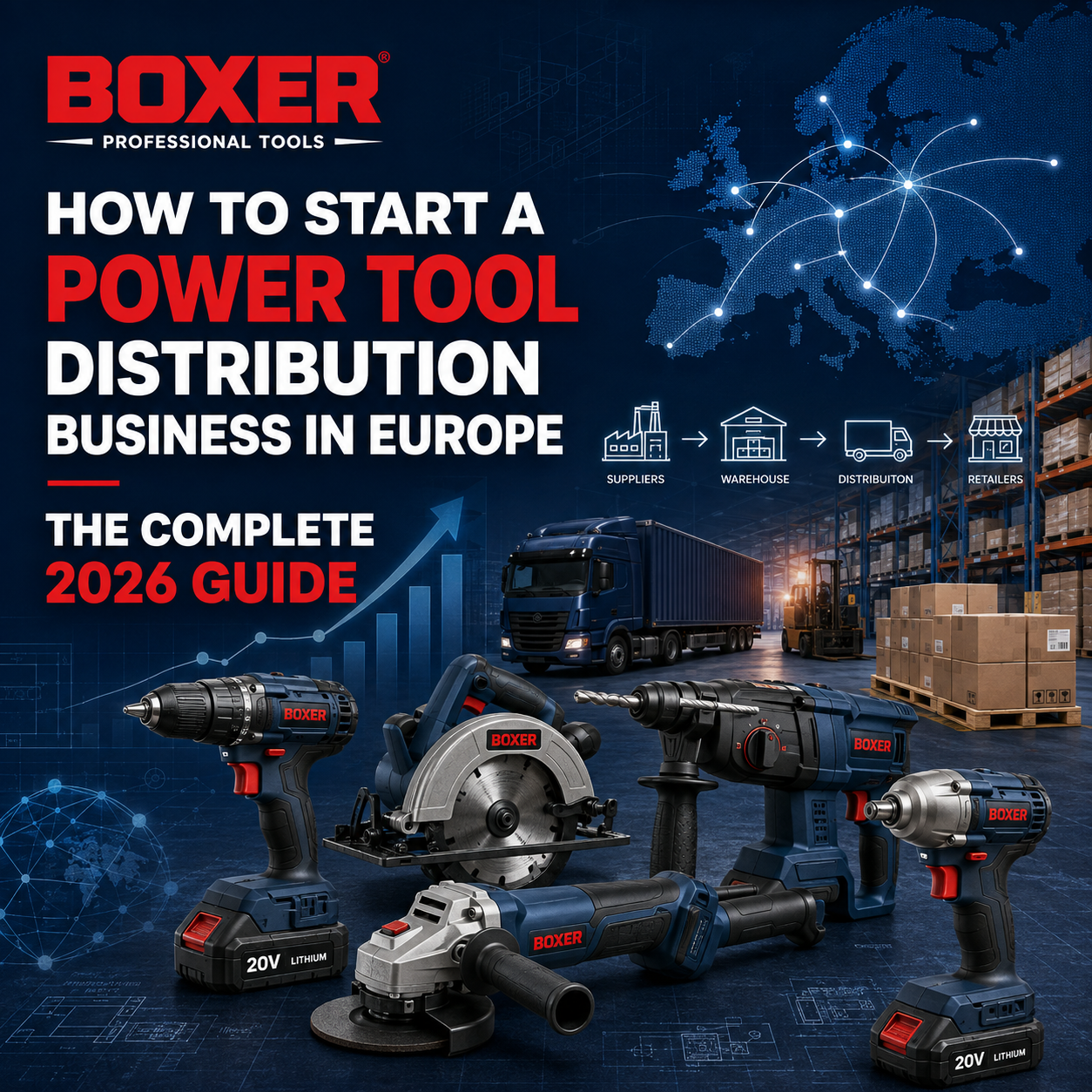
How to Start a Power Tool Distribution Business in Europe: The Complete 2026 Guide
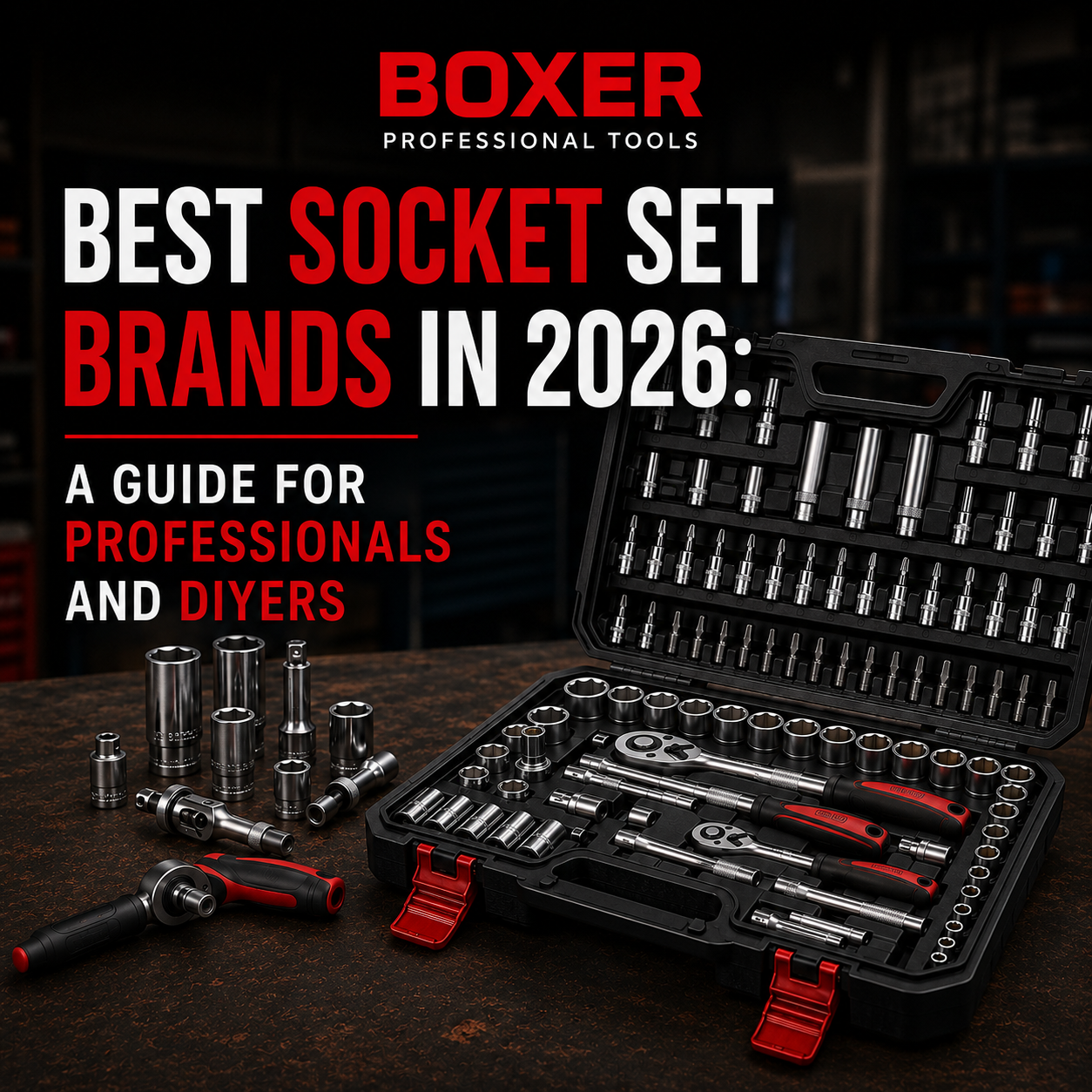
Best Socket Set Brands in 2026: A Guide for Professionals and DIYers

SIGN UP FOR NEWSLETTER
Copyright © 2026 Boxertools | Developed By Mammar Tech