

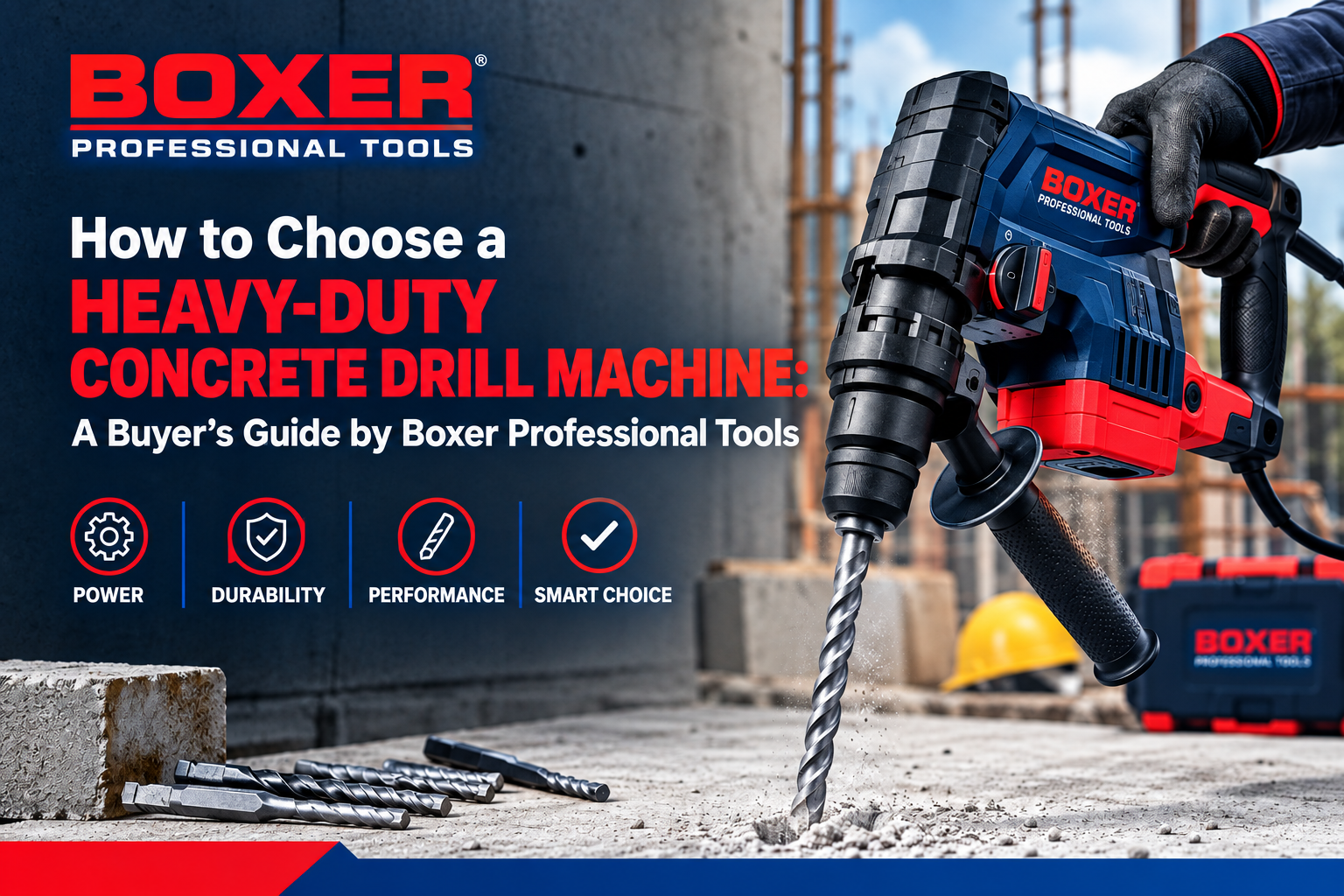
How to Choose a Heavy-Duty Concrete Drill Machine: A Buyer's Guide by Boxer Tools
Most site delays don't come from a shortage of skill — they come from a crew fighting the wrong equipment. Underpowered or poorly matched tools can quietly drag down output on a job site, and when that happens on concrete work specifically, the cost shows up fast in missed deadlines and blown budgets.
Concrete is unforgiving. A motor with plenty of raw wattage still won't cut it if the tool wasn't engineered for sustained impact drilling. At Boxer Tools, we build drilling equipment around what real construction sites actually demand — and this guide walks you through exactly what to look for before you buy.
Step 1: Know What You're Actually Drilling
Before comparing specs, get clear on the job itself:
- Are you drilling into standard masonry, or reinforced concrete?
- Will the machine run occasionally, or is it going into daily heavy use?
- What hole diameters and depths does the work call for?
A machine meant for light, occasional use will not hold up to all-day anchor drilling on a commercial pour — and pushing it there just shortens its life while slowing your crew down. Matching the tool to the application from the start is the single biggest factor in getting good value out of the purchase.
Boxer Tools designs its drilling range specifically around this reality — machines built for the punishment of daily construction use, not just showroom specs.
Step 2: Don't Judge a Drill by Its Wattage Alone
A big power rating on the box is easy to market and easy to fall for — but wattage alone doesn't tell you how a drill performs under real load.
What actually matters for heavy-duty concrete work:
- Torque that holds up in dense, resistant material
- Speed that stays consistent, not one that bogs down mid-hole
- Stamina — performance that doesn't fade over a full shift
- Minimal power drop-off under sustained, continuous use
These are the specs that decide whether your crew keeps a steady pace through an eight-hour day or keeps stopping to let a struggling tool catch up. Boxer Tools' drilling machines are tuned to hold their output steady, not just peak on paper.
Step 3: Look for Genuine Rotary Hammer Action
Concrete responds best to a combination of two forces working together — rotation and impact.
A true rotary hammer doesn't just spin a bit; it layers a hammering motion on top of the rotation, which is what actually lets the bit bite into dense concrete instead of just grinding against it. The payoff:
- Noticeably faster drilling
- Cleaner, more accurate holes
- Less physical strain on the operator
- Better results specifically in reinforced concrete
This is why rotary hammer technology has become the standard tool of choice for serious concrete work, rather than a nice-to-have upgrade.
Step 4: Prioritize Build Quality, Not Just Output
Job sites are hard on equipment — dust, vibration, drops, and back-to-back use all take a toll. A drill that performs beautifully out of the box but degrades within a few months isn't actually saving you money.
Look for:
- A solid, well-sealed housing
- Internal components built to handle vibration and load, not just light use
- A gear system that won't strip or slip under pressure
- Cooling that actually manages heat over long runs
- A realistic, extended service life — not just a warranty period
Boxer Tools builds its heavy-duty range from industrial-grade components specifically so the tool you buy today is still performing at full strength a year — or several years — into hard use.
Step 5: Don't Overlook Ergonomics
No amount of raw power is worth an operator who's exhausted or in pain by lunchtime. Excessive vibration and poor weight balance measurably slow drilling accuracy and increase fatigue over a shift — that's not opinion, it's a well-documented issue in tool ergonomics.
When comparing machines, check for:
- A grip designed for extended holding, not just a quick test swing
- Balanced weight distribution front to back
- Genuine vibration dampening, not just marketing language
- Comfort that holds up over hours, not minutes
Every Boxer Tools concrete drill is shaped around the person actually using it — because a tool that's easier to control all day is also a safer, more accurate one.
Step 6: Check the Safety Fundamentals
A professional drilling machine needs to behave predictably under pressure, every time. That means:
- Stable, controllable operation even under heavy load
- A frame that won't flex or crack under stress
- Heat management that prevents overheating during continuous runs
- Consistent, repeatable performance shift after shift
Choosing a manufacturer with a track record here isn't just about the machine — it's about protecting the people running it.
Why Contractors Choose Boxer Tools
A concrete drill's real job isn't just making holes — it's keeping your crew moving, protecting your margins, and surviving the conditions of an active job site. That's the standard we build to.
What that looks like in the Boxer Tools lineup:
- Motors built for the demands of continuous concrete drilling
- True rotary hammer technology for faster, cleaner holes
- High, sustained torque output
- Rugged construction designed for a long working life
- Ergonomic design that reduces operator fatigue
- Consistent, dependable performance in industrial and construction settings
Every machine we build reflects that same commitment to engineering that holds up on real sites, not just in a spec sheet.
The Bottom Line
Picking the right heavy-duty concrete drill machine comes down to matching the tool to the actual job, checking real-world performance (not just wattage), and buying from a brand that builds for durability and comfort as seriously as it builds for power. Get those right, and the drill stops being a bottleneck — and starts being one less thing you have to think about on site.
Ready to upgrade your crew's drilling setup? Explore the Boxer Tools heavy-duty concrete drill range and find the machine built for your next job.
Related Blogs
Who Buys Angle Grinders and Electric Drills? A Guide for Wholesale Tool Suppliers
Why the 185mm Circular Saw Is the Best Seller Every Tool Shop Should Stock
Boxer SR040 24V Cordless Drill Set: The All-in-One Kit for DIY Users & Wholesale Buyers
Cordless Drills Wholesale Europe 2026: Best Picks for Projects and Professional Use
Hand Tools Wholesale for Europe: Your Autumn and Winter Stocking Guide
Cordless Power Tools Wholesale 2027: Why Cordless Drills Will Be the Top-Selling Tool This Season
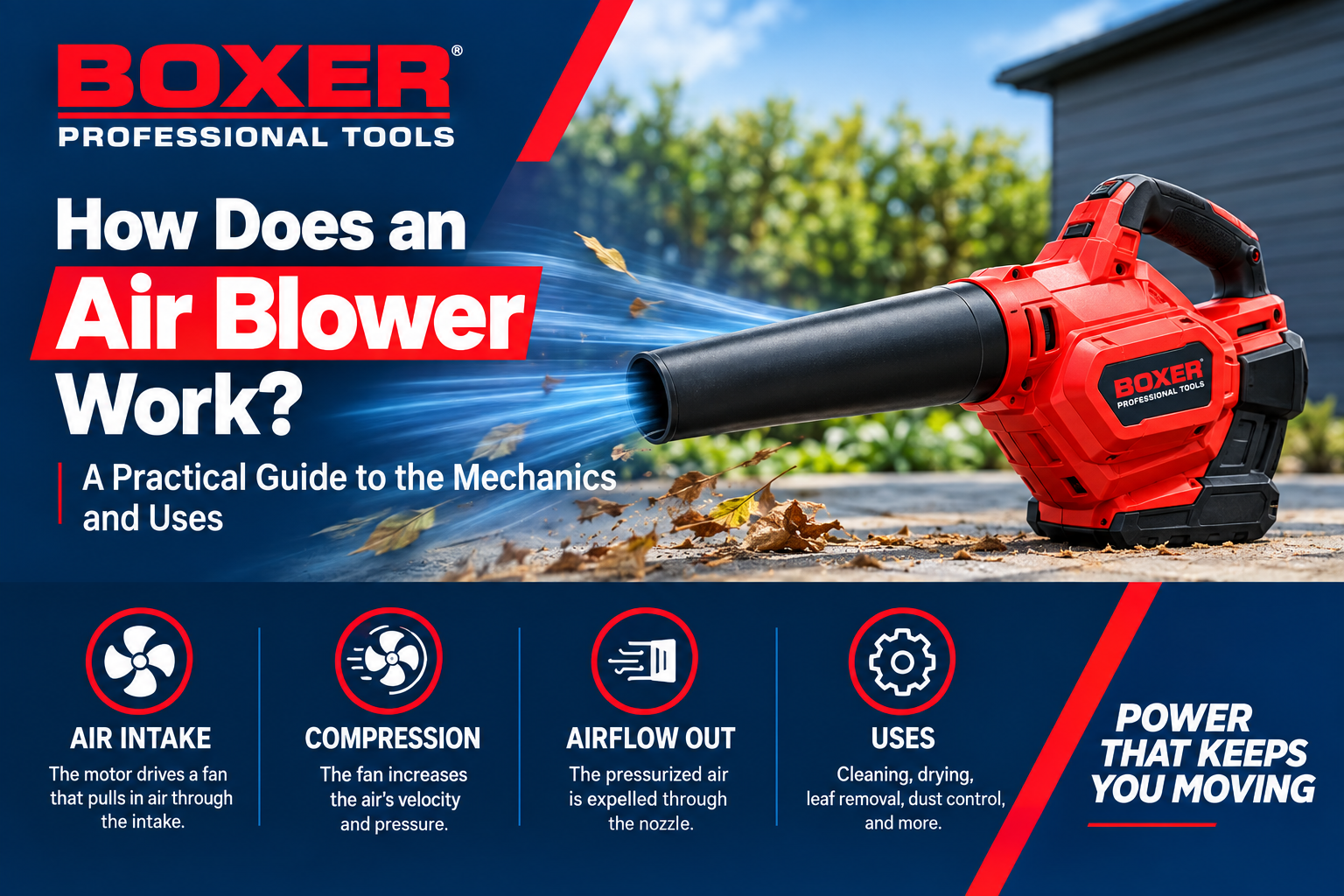
How Does an Air Blower Work? A Practical Guide to the Mechanics and Uses

SIGN UP FOR NEWSLETTER
Copyright © 2026 Boxertools | Developed By Mammar Tech