

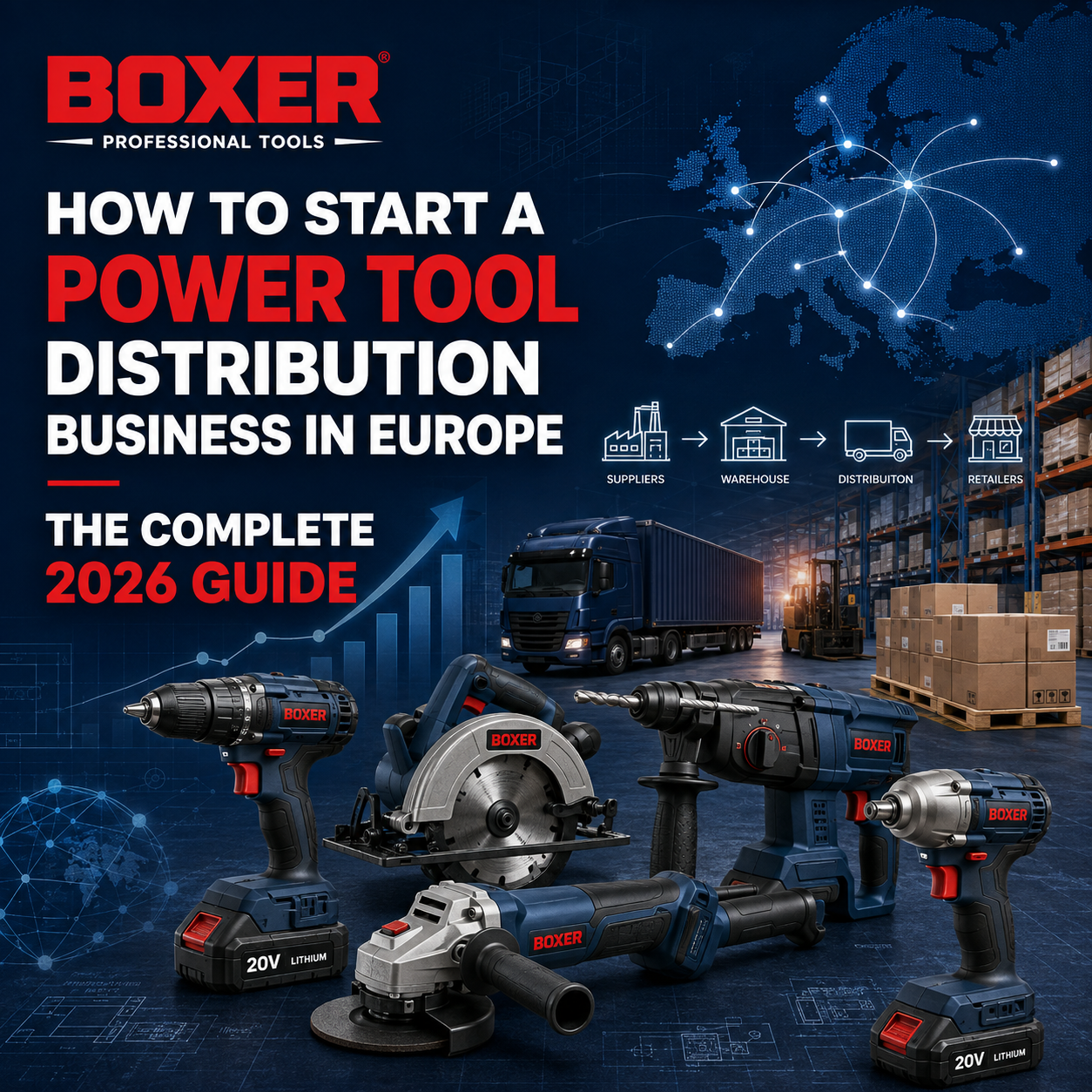
How to Start a Power Tool Distribution Business in Europe: The Complete 2026 Guide
Key Takeaways
- - Power tool distribution in Europe operates under EU-wide rules (CE marking, Machinery Regulation, RoHS, VAT OSS) that don't exist in other markets — getting these right from day one is what separates a real distributor from a reseller.
- - The three viable entry models are: authorized distribution of established brands, independent wholesale/import, and private label under your own name.
- - Margins in power tool distribution typically run 15–30%, but compliance costs, warranty handling, and logistics eat into that fast if they're not planned for upfront.
- - Cross-border trade within the EU single market is simpler than importing from outside it — but only once VAT, EORI, and Intrastat reporting are set up correctly.
- - Long-term success depends less on finding cheap stock and more on supplier reliability, after-sales support, and a defensible niche.
Why the European Power Tool Market Is Different
Power tool distribution in the US and power tool distribution in the EU are not the same business, even though the products look identical. Europe operates as a single regulatory market with its own product safety framework, its own VAT system, and its own logistics rules for moving goods between member states. A distributor who treats "Europe" as one uniform market — or worse, imports US-market assumptions about sales tax and licensing — will hit compliance problems long before they hit a sales ceiling.
Understanding this regulatory foundation isn't a side detail. It's the actual starting point for building a power tool distribution business that can operate legally and scale across borders.
Understanding the European Power Tool Market
- Market drivers
Demand for power tools across Europe is driven by three overlapping forces: construction and renovation activity, the continued shift from corded to cordless tools, and growing demand from both professional trades and DIY consumers. Battery platform compatibility — where one battery works across a manufacturer's whole tool range — has become a major purchasing factor, and it's reshaping which brands distributors choose to carry.
- Distribution models in Europe
There are three main models to choose from, each suited to a different kind of business. Authorized distribution means signing an agreement with a manufacturer to sell their brand within defined terms — this suits businesses that want brand credibility and manufacturer support from day one. Independent wholesale or import means buying stock from wholesalers or manufacturers without an exclusive agreement, which gives businesses more flexibility and the freedom to carry a multi-brand catalogue. Private label means sourcing tools manufactured to a standard specification and selling them under your own brand — the right fit for businesses building a long-term, margin-focused brand rather than reselling someone else's.
Most distributors don't pick one model forever — many start with independent wholesale to validate demand, then pursue authorized status with key brands once volume justifies it.
- The value chain
Manufacturers produce the tools; distributors and wholesalers hold stock and supply retailers, contractors, and industrial buyers; retailers and trade suppliers sell to the end user. As a distributor, your position in this chain determines your margin — and your legal responsibilities, since EU product safety law places specific obligations on "economic operators" at each stage (more on this below).
Legal and Regulatory Setup: What's Actually Different in the EU
This is the section most guides skip — and it's the section that determines whether your business can legally operate.
- Business registration
You'll register your business in the EU country where you're based, following that country's company law (a GmbH in Germany, an Sp. z o.o. in Poland, an SRL in France, and so on). Requirements and timelines vary by country, so check with your local chamber of commerce or a local accountant before assuming a process from one country applies elsewhere.
- VAT registration and the One-Stop Shop (OSS)
If you sell power tools to customers in multiple EU countries, you need to understand the VAT One-Stop Shop scheme, which lets you report and pay VAT on cross-border B2C sales through a single return instead of registering for VAT in every country you sell into. B2B sales within the EU are typically handled differently, using the reverse-charge mechanism — get this set up correctly with an accountant familiar with intra-EU trade, since VAT errors are one of the most common and costly mistakes new distributors make.
- EORI number and customs
If you import tools from outside the EU (a common sourcing route for power tools), you'll need an EORI number (Economic Operators Registration and Identification) to clear customs. Without it, shipments simply won't move.
- CE marking and product compliance — the non-negotiable part
Every power tool placed on the EU market must carry CE marking and comply with the Machinery Regulation (which replaced the Machinery Directive 2006/42/EC), along with relevant EN safety standards for hand-held motor-operated tools (EN 60745 / EN 62841). Cordless and battery-powered tools also fall under EU battery regulation and RoHS (restriction of hazardous substances) rules, and packaging is subject to WEEE (Waste Electrical and Electronic Equipment) obligations.
As a distributor, you're not just reselling — under EU product safety law you're an "economic operator" with specific legal duties: verifying the manufacturer has followed the correct conformity procedure, ensuring the tool carries proper CE marking and documentation, and keeping records that let products be traced back through the supply chain. This is one of the biggest structural differences from distribution models in non-EU markets, and it's why sourcing from a verified, compliant supplier matters more than sourcing from the cheapest one.
- Insurance and risk management
General liability and product liability insurance are essential given the higher injury risk profile of power tools compared to most consumer goods. Business interruption cover is also worth considering once you're holding meaningful inventory value in a warehouse.
Sourcing Power Tools: Building a Reliable Supply Chain
- Manufacturer relationships
Whether you're sourcing from established European brands or manufacturers based in Asia, the fundamentals are the same: verify certifications before price, request current compliance documentation, and always test samples before committing to volume. A supplier that's cheaper but can't produce CE documentation on request isn't a cheaper supplier — it's a liability you haven't priced in yet.
- Evaluating product quality
Look past the spec sheet. Check build quality, motor performance under sustained use, battery cycle life for cordless lines, and — critically — how the manufacturer handles fault rates and warranty claims. This last point matters more in power tools than in most product categories, because return and claim rates run higher than typical consumer goods.
- Negotiating terms
Price, payment terms, minimum order quantities, lead times, and after-sales support should all be negotiated together, not in isolation. A slightly higher unit price with faster lead times and clear warranty support is often the better deal once you account for the true cost of stockouts and customer complaints.
Setting Up Operations and Logistics
- Warehousing
Your warehouse location should minimize transit time to your core customer base while remaining accessible for freight. Inventory management software that tracks stock levels, automates reordering, and records product location isn't optional at scale — it's what prevents the two most expensive warehouse mistakes: stockouts on fast-moving lines and dead capital tied up in slow-moving ones.
- Cross-border logistics within the EU
Moving goods between EU member states is significantly simpler than importing from outside the bloc, since goods that have already cleared EU customs move freely across internal borders. However, once your intra-EU trade crosses certain thresholds, you'll need to file Intrastat declarations — a statistical reporting requirement that catches many new distributors off guard because it's separate from VAT reporting.
- Order fulfillment
A clear, efficient order fulfillment process — receiving, processing, picking, packing, shipping — directly affects customer retention in a market where buyers (especially trade and contractor customers) expect fast, reliable delivery.
Pricing and Margin Strategy
Typical distributor margins in power tools range from 15% to 30%, depending on product category, brand positioning, and competitive intensity. Premium and specialist product lines carry stronger margins; commodity categories are squeezed by competition and price transparency (especially online).
Volume-based pricing tiers work well for encouraging larger orders from trade and retail customers, but the discount structure needs to be modeled against your actual landed cost — including freight, customs duties where applicable, and the VAT treatment of the sale — not just the wholesale purchase price.
Becoming an Authorized Distributor
Manufacturers typically require an established business entity, adequate warehouse capacity, a credit history that demonstrates financial reliability, and either an existing customer base or a credible sales plan before granting authorized distributor status. The application process varies by manufacturer but generally involves submitting business documentation and, for larger accounts, a direct conversation or site visit.
Authorized status brings real benefits — access to warranty support, co-marketing resources, and stronger brand credibility with your own customers — but it comes with obligations too: maintaining minimum stock levels, adhering to pricing policies, and providing a defined standard of customer support.
Marketing and Sales Channels
A distributor's brand is built on more than logo and colors — in a trade-driven category like power tools, credibility comes from consistent product availability, clear technical information, and responsive customer service. Digital channels (a well-structured website, SEO, and targeted online advertising) now sit alongside traditional trade shows — events like Cologne's Eisenwarenmesse remain genuinely valuable for relationship-building and staying current on product trends, even in an increasingly digital-first industry.
Direct relationships with retailers and contractors remain the backbone of B2B sales in this category: understanding what a specific trade customer actually needs, offering consistent pricing, and communicating proactively about stock and delivery builds the kind of loyalty that price alone can't buy.
---
Financial Management Essentials
Cash flow discipline is what keeps a distribution business solvent through seasonal demand swings — power tool sales often peak around spring/summer (outdoor and construction tools) and again in autumn. Inventory financing options such as asset-based lending or supply chain financing can help fund stock purchases without straining working capital, but they should be evaluated against their actual cost of capital, not just their availability.
Tracking key metrics — gross margin, inventory turnover, and GMROI (gross margin return on investment) — gives an early warning system for which product lines are actually profitable once holding costs and claim rates are accounted for.
Scaling Across the European Market
Expanding across EU borders is genuinely easier than international expansion elsewhere, thanks to the single market — but "easier" doesn't mean "automatic." Before entering a new country, distributors should account for language and labeling requirements, local competitive dynamics, and country-specific business registration or tax obligations that may apply even within the EU's harmonized framework.
Adding value-added services — tool rental programs, repair and maintenance, or training for trade customers — is one of the more effective ways to differentiate once core distribution is running smoothly, particularly in mature markets where product availability alone is no longer a competitive edge.
Do I need a specific license to distribute power tools in the EU?
There's no single "power tools license," but you do need standard business registration in your home country, VAT registration (and OSS registration if selling cross-border B2C), and an EORI number if importing from outside the EU. Product-level compliance (CE marking, EN safety standards) applies to the tools themselves, not to your business registration.
What margins can a new power tool distributor realistically expect?
Industry margins typically range from 15% to 30%, with premium or specialized product lines at the higher end and commodity categories compressed by competition. Actual profitability depends heavily on how well logistics, claims, and holding costs are managed.
Is it easier to distribute across EU countries than to import from outside the EU?
Generally yes — goods that have cleared EU customs move freely between member states, avoiding repeated customs processes. Cross-border sellers do need to manage VAT correctly (via the OSS scheme for B2C, reverse-charge for B2B) and, above certain volume thresholds, Intrastat reporting.
What's the biggest compliance mistake new distributors make?
Sourcing from a supplier who can't provide current CE documentation. As an economic operator under EU law, a distributor carries legal responsibility for verifying compliance — not just the manufacturer.
Starting a power tool distribution business in Europe is a genuinely strong opportunity — construction and DIY demand isn't slowing down, and the EU single market makes cross-border scaling more accessible than in most regions. But the businesses that actually succeed long-term are the ones that treat compliance, supplier vetting, and logistics as core strategy from day one, not paperwork to handle later.
Boxertool.eu works with trade buyers, retailers, and distribution partners across Europe, offering verified, CE-compliant power tool stock with transparent pricing and reliable cross-border logistics — a practical starting point for anyone building a distribution business in this market.
Thinking about starting or scaling a power tool distribution business? [Contact Boxertool.eu] to talk through sourcing, pricing, and logistics for your market.
Related Blogs
How to Choose a Heavy-Duty Concrete Drill Machine: A Buyer's Guide by Boxer Tools
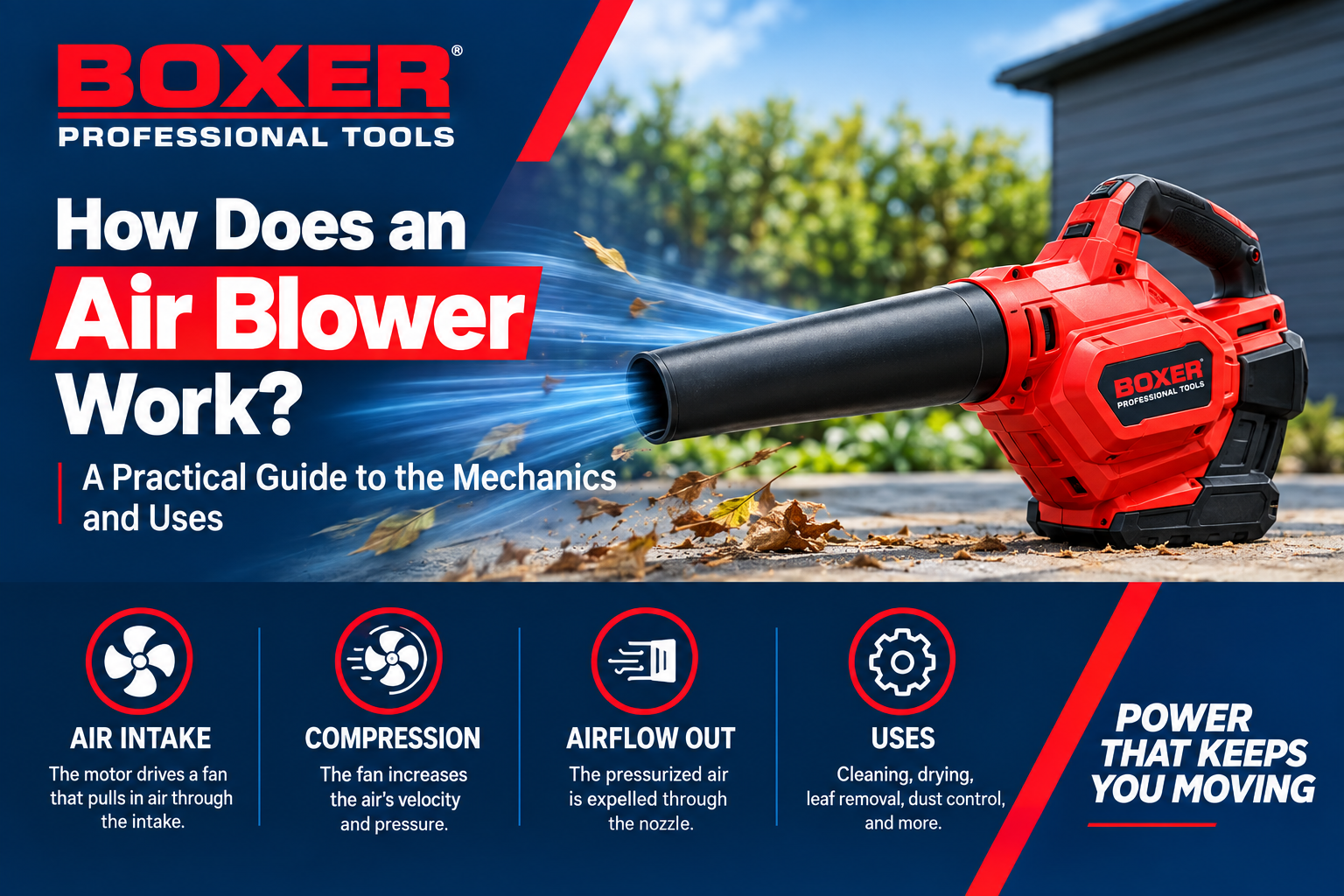
How Does an Air Blower Work? A Practical Guide to the Mechanics and Uses
Power Tool Trends for 2026: A Guide for Wholesale Buyers and Distributors
Top 10 Wholesale Angle Grinder Manufacturers Worldwide
How to Choose the Right Cordless Garden Tools in 2026
European Power Tools Suppliers: How to Find the Best Wholesale Partners in 2026
Best Socket Set Brands in 2026: A Guide for Professionals and DIYers

SIGN UP FOR NEWSLETTER
Copyright © 2026 Boxertools | Developed By Mammar Tech