

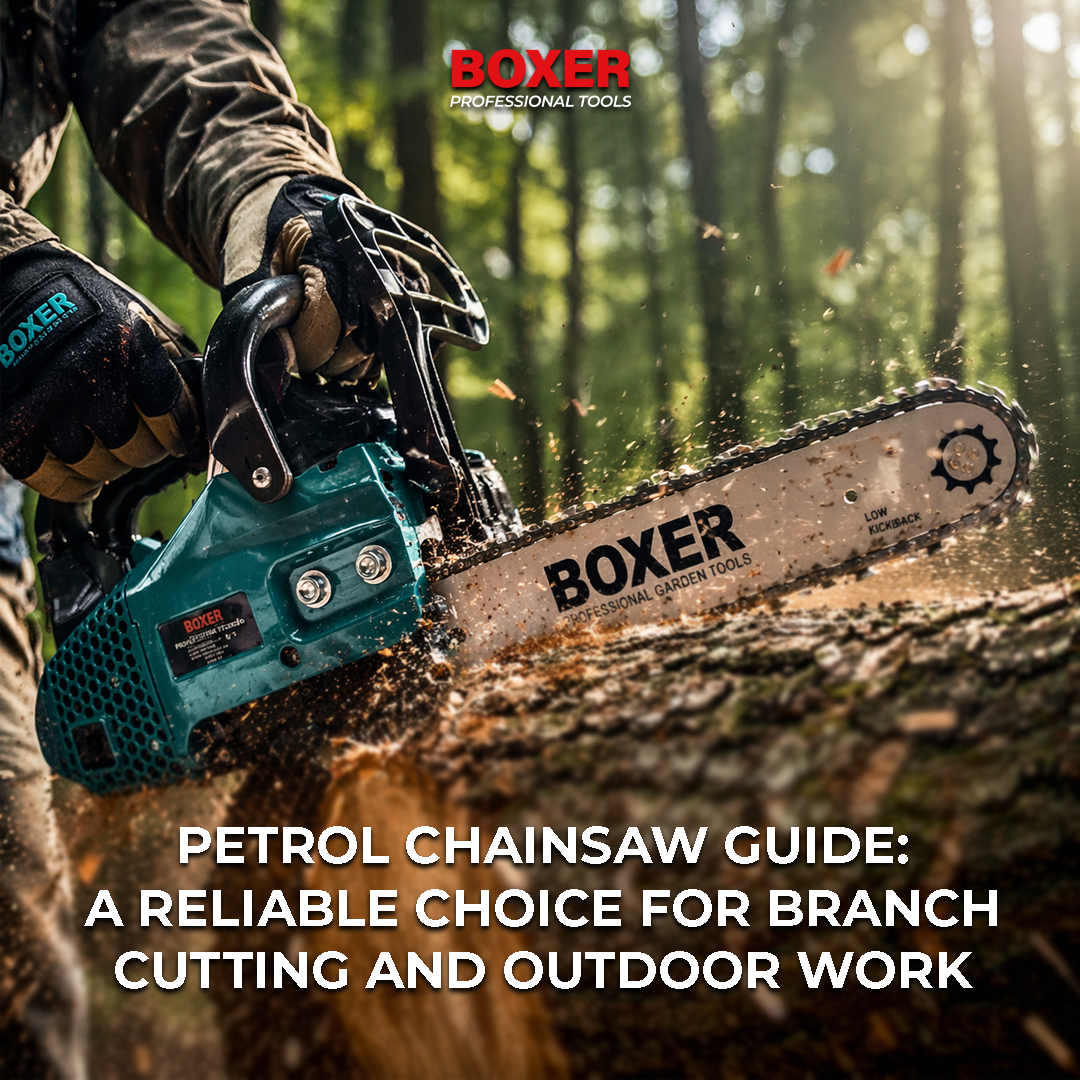
Petrol Chainsaw Guide: A Reliable Choice for Branch Cutting and Outdoor Work
What is a petrol chainsaw — and why does it matter?
Who actually needs a petrol chainsaw?
- Farmers and landowners — clearing overgrowth, managing tree lines, cutting firewood, or processing storm damage across large plots of land.
- Homeowners — tackling seasonal garden maintenance, pruning overgrown trees, or dealing with fallen branches after bad weather.
- Professionals and contractors — arborists, landscapers, and construction crews who need reliable daily-use equipment that won't let them down on site.
- Retailers and tool resellers — stocking proven, high-demand tools that customers actually come back for.
Key features to look for in a petrol chainsaw
- Engine power
- Guide bar length
- Chain speed
- Automatic chain oiling
- Weight and ergonomics
- Fuel and oil tank capacity
A solid example: the Boxer Tools BX106 petrol chainsaw
Key Specifications
- Product Code: BX106
- Guide Length: 30 cm
- Engine Power: 2.2 HP
- Combustion Power Supply
- Oil Tank Capacity: 20 ml
- Fuel Tank Capacity: 230 ml
- Automatic Chain System
- Chain Pitch: 3/8''
- Chain Speed: 18 m/s
- Product Weight: 3 kg
- Packaging Weight: 5 kg
What stands out about the BX106 is the combination of an 18 m/s chain speed and automatic chain oiling in a tool that weighs just 3 kg. That's a genuinely useful package for anyone doing branch work — light enough to handle comfortably overhead, fast enough to cut cleanly through thick limbs without stalling. The 3/8" chain pitch is a standard, widely-available size, which also makes replacement simple and affordable.
For homeowners dealing with seasonal pruning, farmers managing overgrown land, or contractors who need a portable secondary saw on site — the BX106 handles all of it without complaint.
Petrol chainsaw safety tips you should never skip
A petrol chainsaw is a powerful tool — and with power comes responsibility. Here are the basics every user should follow:
- Always wear cut-resistant gloves, safety goggles, and sturdy footwear before starting.
- Never operate a chainsaw above shoulder height or on an unstable surface.
- Check chain tension and oil levels before every use.
- Keep bystanders well clear of your cutting area.
- Allow the engine to cool before refuelling.
- Store in a dry place with the chain guard fitted.
Maintenance tips to keep your petrol chainsaw running longer
A well-maintained petrol chainsaw can last years. A neglected one will let you down when you need it most. Follow these simple habits:
- Clean the air filter after every 10 hours of use.
- Sharpen or replace the chain regularly — a blunt chain is dangerous and inefficient.
- Use fresh, quality petrol — stale fuel is one of the top causes of starting issues.
- Check bar groove alignment and clean debris from the bar slot after each session.
- Drain the fuel tank if storing for more than 30 days to prevent carburettor gumming.
For farmers, professionals, homeowners, and retailers, a dependable petrol chainsaw can make outdoor work more efficient and manageable. A lightweight yet powerful option like the BX106 Petrol Chainsaw from Boxer Tools provides a practical solution for branch cutting, garden maintenance, and farm work.
Choosing the right petrol chainsaw not only improves productivity but also ensures smoother and more reliable performance across a wide range of cutting applications.
Related Blogs
Hand Tools Wholesale for Europe: Your Autumn and Winter Stocking Guide

Cordless Power Tools Wholesale 2027: Why Cordless Drills Will Be the Top-Selling Tool This Season

How to Choose a Heavy-Duty Concrete Drill Machine: A Buyer's Guide by Boxer Tools

How Does an Air Blower Work? A Practical Guide to the Mechanics and Uses

Power Tool Trends for 2026: A Guide for Wholesale Buyers and Distributors

Top 10 Wholesale Angle Grinder Manufacturers Worldwide

How to Choose the Right Cordless Garden Tools in 2026

SIGN UP FOR NEWSLETTER
Copyright © 2026 Boxertools | Developed By Mammar Tech